

There has never been an easier time in history for an artist to show someone their work.
Finish a canvas this afternoon. Photograph it. Post it. By dinner, someone in Britain has seen it, someone in Poland has seen it, someone in India has seen it. No gallery decided whether it was good enough. No critic wrote about it first. No patron had to open a door.
For anyone who spent years wondering if their work would ever be seen by more than a few people, that’s not a small thing. It’s the thing.
And still — artists with real followings, thousands of people, sometimes tens of thousands, post work that gets hearts and kind words and shares, and struggles to sell. The appreciation is often genuine. I don’t doubt that when I see it happen to artists I know.
But loving something and buying it are not the same act. They don’t even live in the same part of a person.
Which leaves us with a question earlier generations of artists would barely have understood: how do you turn attention — abundant, easy, constant attention — into a desire strong enough that someone hands over money for it?
What artists used to need was a door
Two hundred years ago, an artist’s problem was access. Wealthy patrons, churches, royal courts — these were the gatekeepers who decided who got to work and who got seen. By the late 1700s, the academies had taken over much of that role too. The Metropolitan Museum’s history of the Salon and Royal Academy describes these institutions as holding something close to a monopoly on public taste and official patronage.
Some artists refused that arrangement. The Impressionists organized their own show in Paris in 1874 rather than wait for the Salon’s approval — and the gap tells you everything about how steep the climb was. The Met’s numbers put attendance at that first Impressionist show around 3,500 people. The official Salon, opening around the same time, drew something like 450,000.
Talent existing quietly in a studio was not enough. Someone with power had to let you through.

Then it was a gallery
Move forward a century and the gatekeepers had changed clothes. Dealers and commercial galleries became the bridge between artist and buyer. Research from the Getty on the international art market between 1880 and 1930 shows how central dealers became to building the collections and institutions we still think of as major today.
That system excluded plenty of people who deserved better. But it also did something for the person on the other end — the buyer standing in the gallery didn’t have to sort through everyone. Someone had already looked, already chosen. Curation solved a real problem: where do I even start?
Then it was exposure itself
By the 1980s, an artist in a smaller city still couldn’t finish a painting and put it in front of the world by afternoon. You needed an exhibition, a mailing list, a write-up, an art fair, a slide sent to the right person. Reach took infrastructure. And because it took infrastructure, exposure itself was rare enough to be valuable.
Then the internet arrived and took that scarcity apart. Websites gave artists their own storefront. Marketplaces widened the pool of possible buyers. Search let strangers find you without knowing you existed. And then social media went further still — you didn’t even need someone to search. Your painting could just show up in front of them.
I don’t want to undersell what that did. It’s real freedom, and it changed what’s possible for artists who would otherwise have stayed invisible their whole careers.
But it gave that freedom to everyone. You gained access to the world. The world gained access to every other artist, too — and that second half of the sentence is the part we don’t talk about enough.
The feed doesn’t let anyone stand still
Scroll through an art-heavy feed for ten minutes and count what passes in front of you. A landscape that took someone weeks. A portrait with real weight in it. A charcoal drawing, technically stunning. An abstract piece full of colour and risk. Then a dog video. Then someone’s dinner. Then an ad.
The problem isn’t that people have stopped recognizing good work. It’s that we’ve all gotten used to the next good thing arriving in about four seconds. A 2024 study in Frontiers in Psychology found a real link between information overload and social media fatigue — our capacity to absorb and respond isn’t infinite, even when the content is.
Your painting isn’t only competing with the next painter. It’s competing with everything, all of it, at once. And a feed is built to reward movement, not stillness. A gallery asks you to stand in front of something. A feed asks you to keep going.
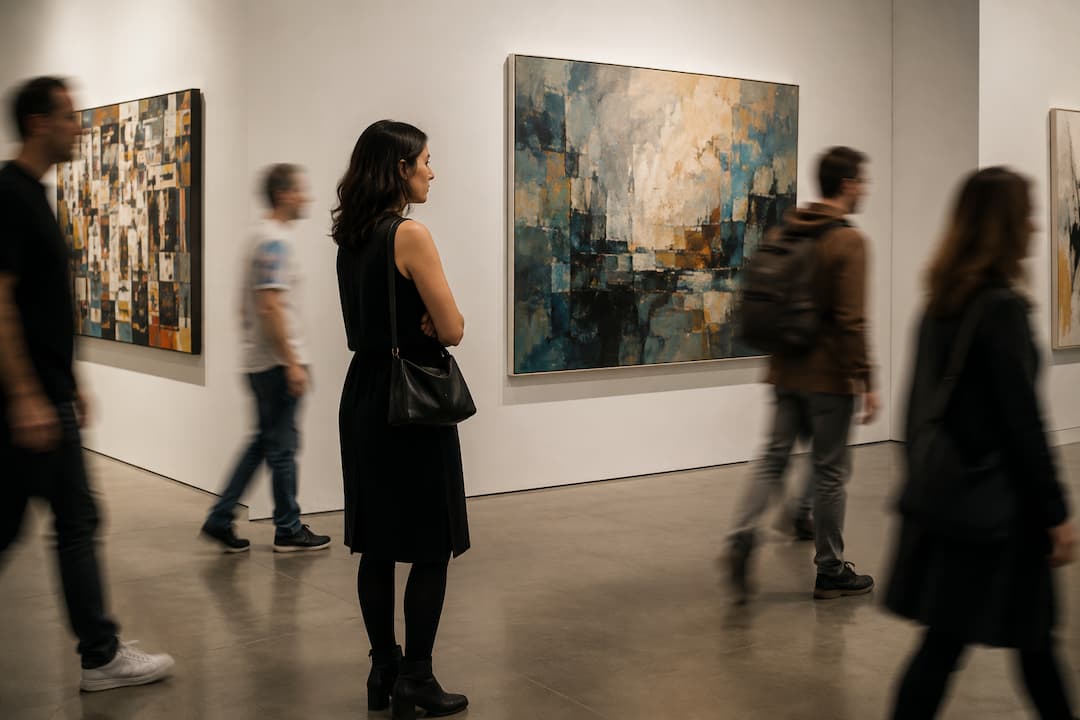
Followers are not the same thing as collectors
This is the distinction that gets lost the most, and it’s the one that matters most.
Someone can follow you for years. Like nearly everything. Tell you your latest piece is beautiful, share it with a friend, root for you sincerely. None of that is fake, and none of it is nothing.
But buying original art asks something different of a person than clicking a heart does. They have to want to own it, not just see it. They need a wall for it. They need to trust you. The price has to make sense against their actual life. And they have to want this piece more than every other piece competing for the same slice of income.
Attention. Interest. Desire. Purchase. Social media is genuinely good at the first step. It can help with the second and third. The fourth is a different kind of ask entirely.
Yes, people really are buying art online — just not the people you’d think
There’s good evidence that digital buying is real. The Art Basel and UBS Survey of Global Collecting 2025 found that 51% of high-net-worth collectors surveyed had bought through Instagram, and buying directly from artists had grown too.
But notice who was asked. High-net-worth collectors — people who already think of themselves as collectors and already have the means to act like one. Even among them, galleries and dealers remained the channel they used most and spent the most through, and 58% had bought at an art fair.
The newest numbers make the physical-versus-digital picture even more interesting. The Art Basel and UBS Global Art Market Report 2026 puts the global art market at $59.6 billion in 2025, up 4% — real growth, the first in a couple of years. And in that same year, online-only sales actually fell to $9.2 billion, their lowest point since 2019, as higher-value buying shifted back toward in-person channels.
So people didn’t stop buying art online. But they didn’t abandon the physical world for it, either. People buy through more than one door, and standing in front of a piece still does something a photo can’t.
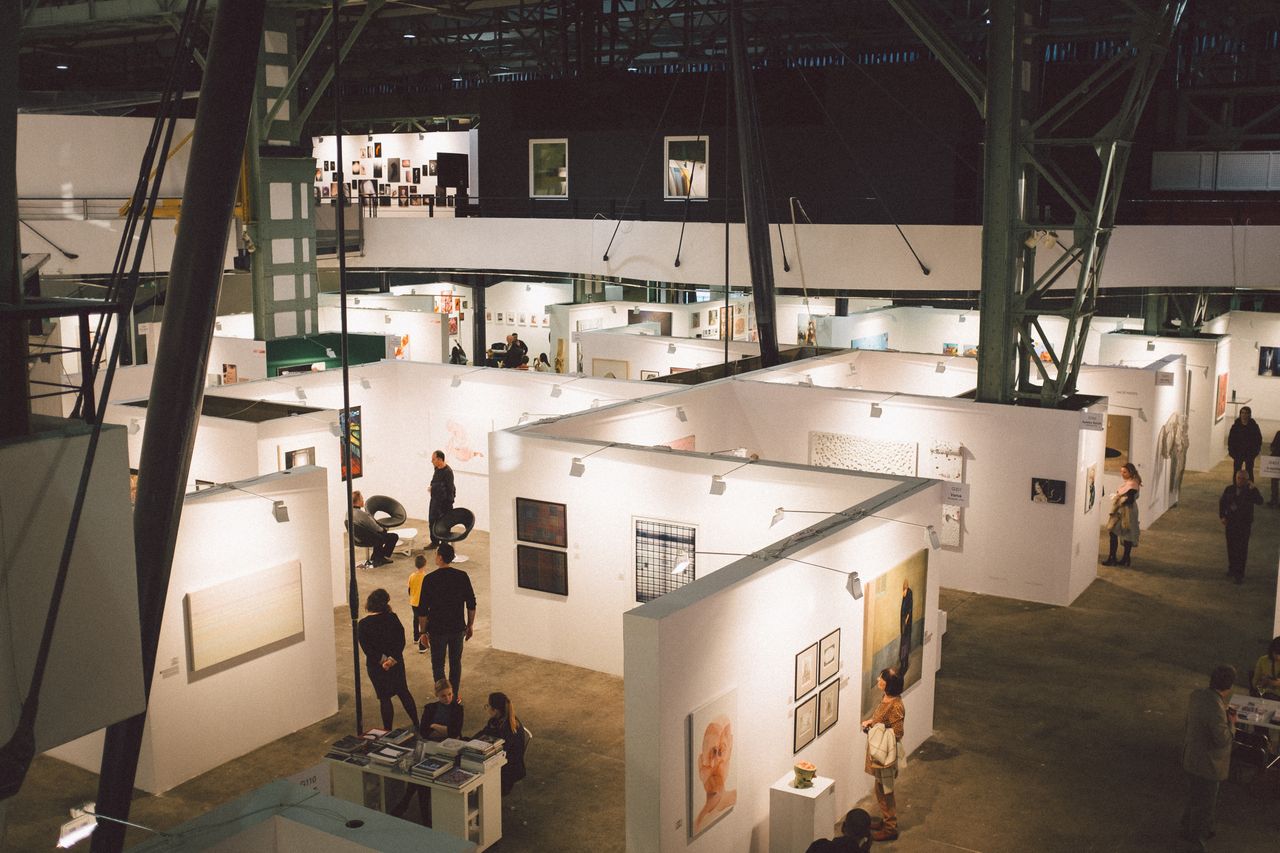
Why commit to one thing when there’s always another coming
Here’s a harder question, and I don’t think it has a clean answer. What happens to the want to own something when seeing art becomes effectively unlimited?
For most of history, seeing art took effort. You went somewhere. Ownership meant something specific: continuing access to an object most people would never get close to. Now everyone with a phone carries an endless exhibition in their pocket — which is not remotely the same as owning a painting. A six-inch screen can’t give you scale, or texture, or the way a piece changes the room it’s actually in. But it can satisfy something else: the appetite for constant visual novelty.
Why land on this one, when another is one swipe away?
A large meta-analysis in the Journal of Consumer Psychology found that too many choices doesn’t automatically overwhelm people — it depends on how complicated the options are, how sure someone is of what they want, what they’re trying to do. Art buying happens to hit most of those complications at once. Taste is personal and hard to explain even to yourself. Prices vary wildly. The emotional stakes are real. And online, the number of alternatives never actually ends.
I like this is easy to feel. I want this one, specifically, enough to buy it is a much higher bar to clear — and it’s the bar that actually matters.
Your market went global. So did everyone else’s
Artists talk, rightly, about reaching people outside their own city. An artist in New Westminster can sell to someone in Berlin now. Nobody has to wait for a local gallery to decide if their work is worth showing.
But the same door swings both ways. That collector in Berlin isn’t just discovering you — they’re discovering artists in Ukraine, Portugal, Australia, everywhere, all at once, in the same scroll. The feed doesn’t sort people into career stages or keep emerging artists in a separate lane from established ones. It just puts everything in one stream and lets the viewer decide.
That makes standing out a genuinely different, and harder, problem than it used to be.
Even connection is crowded now
The standard advice artists get is to connect — tell your story, show your process, be real, build community. It’s not bad advice. People do respond to the person behind the work.
But everyone’s been handed the same script. You’re being told to build connection at the exact moment thousands of other artists, creators, causes, and brands are asking the same audience for the same thing. Our ability to reach people has become nearly unlimited. Our capacity to actually connect with them hasn’t moved an inch. People have families, work, news, the other creators they already follow — there’s only so much of them to go around, and an artist’s story, however honest, is competing for a finite thing.
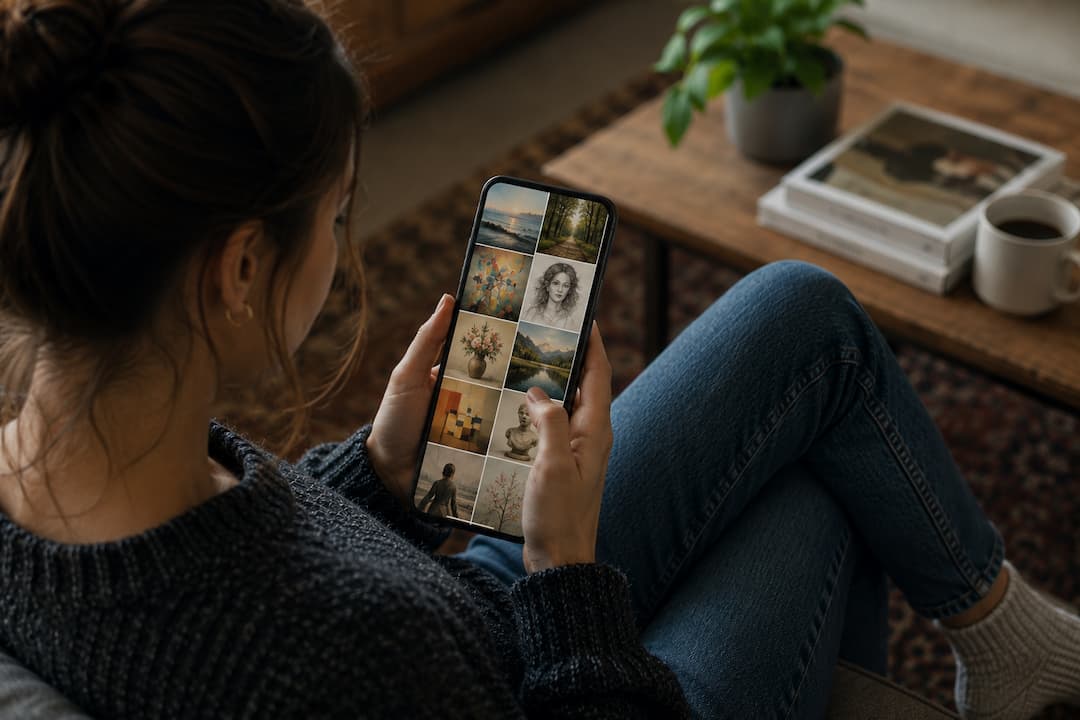
And then there’s the scarcity nobody figured out
Money.
The internet can hand someone another thousand paintings to look at tomorrow. It cannot hand them another thousand dollars to spend.
Original art asks more of someone financially than most other things people support. A book might be $25. An album, a concert ticket, a few dollars a month to a creator — all within easy reach. A painting can be hundreds or thousands. Someone can adore your work, follow you for years, want good things for you, and still not have $1,500 sitting free in their life this month. That’s not a failure of enthusiasm. It’s just where the money actually is.
And the numbers on artist income back this up starkly. A 2024 study out of the University of Glasgow and DACS, covering over 1,200 UK visual artists, found a median annual income of just £12,500, with more than 80% describing their earnings as unstable. In Canada, Hill Strategies’ analysis of thirty years of census data tells a similarly hard story — artists consistently earning less than other workers, decade after decade.
We’ve written about this before, in You’re Not Failing: Artists Have Always Had Day Jobs. The point here is a little different, though: we didn’t fail to figure out how to put art online. We just solved visibility years before we came anywhere close to solving the economics underneath it.
Removing the gatekeepers took something with it
For a long time, getting past the gatekeepers was the whole dream. And it should have been — artists no longer need permission from a gallery or a critic or an institution to speak to an audience directly. That’s a real and good thing.
But gatekeeping and curation were never quite the same job, even though one system did both. Gatekeeping decides who gets in. Curation helps someone find their way through too much. The old system kept out people who deserved better — but a good dealer or curator could also say, in effect, I’ve looked at a great deal of work, and I think this deserves your time. In a world with more art than anyone could ever evaluate, that service hasn’t gotten less valuable. If anything, it’s gotten more.
Artists got the freedom to reach anyone. Buyers inherited the job of figuring out, on their own, what’s actually worth their attention.
The question keeps changing shape
Two hundred years ago: how do I reach the people with the power to support my work? A hundred years ago: how do I get into the rooms where collectors will actually see it? Forty years ago: how do I get seen at all, outside my own community? Today: how do I turn attention into desire, and desire into someone actually buying?
The problem never went away. It just moved.
And maybe that’s why this moment feels so disorienting. We can finally see the numbers — followers, reach, likes, shares, views — in a way no artist before us ever could. Earlier generations often had no idea how many people had even encountered their work. We get to watch thousands of people respond in real time, and still sell nothing. The visibility makes the silence after it feel personal in a way it never used to.
But it was never personal. Visibility and the will to buy were never the same measurement. They just look like they should be.

Social media still matters. It was just never going to be enough on its own
None of this is a case for stepping away from social media — that would mean giving up one of the most powerful discovery tools artists have ever had. Collectors do find artists this way. People do buy through Instagram. Real attachments form between artists and the people who follow them.
The mistake is asking one channel to do a job that was always going to need several. A website, an email list, the right gallery relationship, marketplaces, open studios, art fairs, referrals from people who’ve already bought from you — these aren’t backups to social media, they’re the rest of the ecosystem it was never built to replace on its own.
And don’t underestimate what happens when a real person stands in front of a real piece of work. We wrote about this directly in In-Person Art Shows Are Crucial for Selling Your Paintings — and the current market data backs it up. Art fairs still matter enormously, even to collectors who are perfectly at ease buying online. If you’re navigating a harder selling environment right now, Selling Art in Uncertain Times: What Actually Works Now looks more closely at what’s actually moving for artists under current conditions.
It was never online or offline. It’s finding enough real points of contact that the right person gets the chance to discover the work, sit with it, remember it, and eventually decide they want to live with it.

Being seen was never the finish line
We’re living through something genuinely extraordinary — more people than ever able to make something and put it in front of a global audience almost immediately. That’s worth celebrating, plainly and without qualification.
But democratized visibility and democratized success turned out to be two very different things.
Attention is abundant. Human attention isn’t. Art is everywhere now. Money still isn’t. Everyone can connect with everyone — but nobody’s capacity to actually be connected to grew to match it.
Maybe this isn’t the moment the artist’s oldest struggle finally disappears. Maybe it’s just the next version of it — another chapter in a long history of artists figuring out what stands between the work they’ve made and the people who might come to need it.
The good part is still true, though. Buyers are still buying. People still walk into a room and fall for something they didn’t know existed an hour before. Doors have opened that didn’t used to exist.
Being visible was only ever the beginning.
The harder question — the one worth sitting with — is what makes someone stop scrolling. What makes them remember. And what it actually takes for attention to become desire strong enough to own the thing.
If any of this resonated, don’t just keep scrolling past it. Browse the art store and give yourself the chance to actually stop on something — the way a real room, not a feed, would let you.
And if you’d rather keep discovering artists at your own pace, sign up for our newsletter. It’s one more real point of contact, not another thing competing for your attention.
Leave a Reply